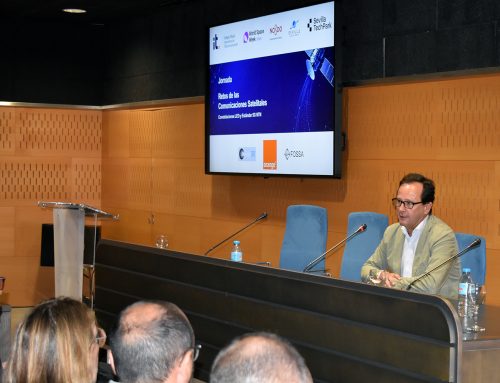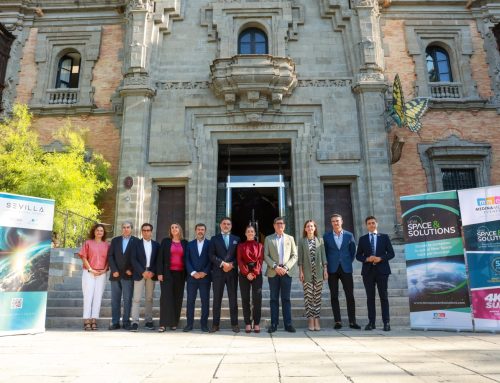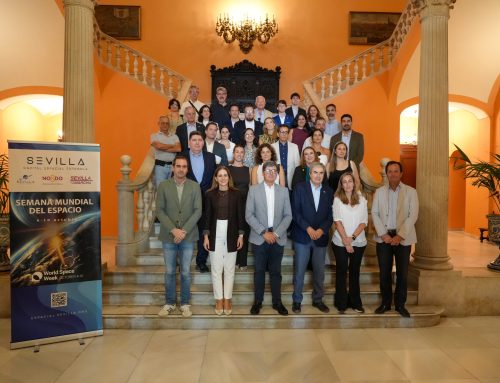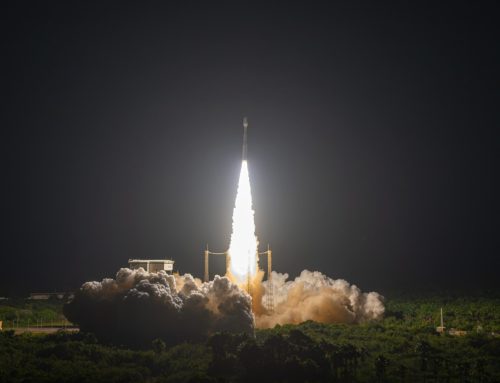

Under the slogan ‘Launchers’ Revolution’, Seville is celebrating World Space Week until next Saturday, a technology event featuring more than 40 activities spread across the city. The extensive programme includes the launch of the third edition of “New Space & Solutions” and the “ESA BIC Andalucía Info Day”, organised by the European Space Agency’s Seville-based incubator.
In addition, technology centres such as Catec and the Official College of Telecommunications Engineers are opening their doors to showcase their industrial capabilities. Meanwhile, institutions such as the Cajasol Foundation, the Casa de la Ciencia, CaixaForum, the University of Seville and the IBiS are organising interactive workshops, planetarium shows and conferences to inspire a new generation of young people to pursue careers in science.
The aerospace industry plays a key role in the diversification of Seville’s economic model. It is a sector that is growing year on year in terms of turnover and job creation, and which brings innovation and international visibility. In this regard, the province of Seville accounts for approximately 70 per cent of Andalusia’s aerospace business ecosystem, according to data from Andalucía Aerospace. Of the nearly 150 companies operating in the sector across the region, more than a hundred are based in Seville and its metropolitan area, making it the leading aerospace industrial hub in southern Spain. This concentration is also reflected in economic terms, as the Andalusian aerospace sector generates a turnover of almost 3,000 million euros a year.
Airbus remains the cornerstone of this production system. The Airbus Defence and Space plant in San Pablo, next to Seville Airport, directly employs around 3,500 workers and is one of the group’s most important industrial facilities in Europe. Among other things, it carries out the final assembly of the A400M, as well as engineering, testing, support and training activities.
A key project is the one known as Pilatus, which carries out industrial activities linked to the manufacture of structural components and systems for aircraft such as the PC-24, integrating these operations into its global supply chain. Unlike Airbus, whose production model is based on large multinational programmes and a strong link to public defence contracts, Pilatus offers a different and complementary industrial profile, with greater flexibility and shorter production cycles.
Source: La Razón