
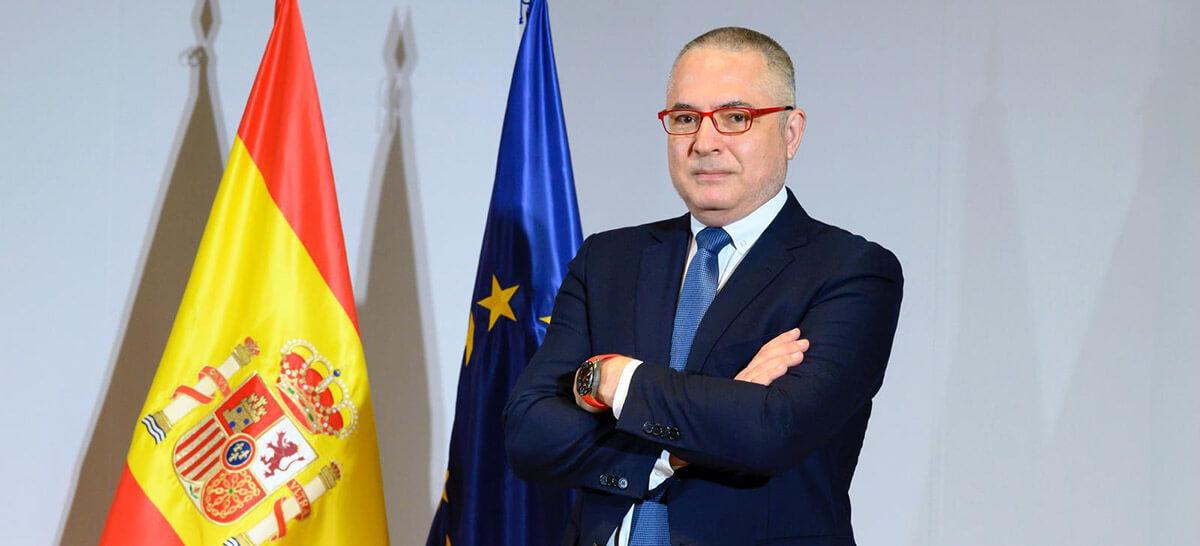
The Director of the Spanish Space Agency (AEE), Juan Carlos Cortés, has been unanimously elected Chair of the Council of the European Space Agency (ESA), the main executive body of the intergovernmental organization that brings together 23 member states. The appointment was made following a meeting held in Interlaken (Switzerland), in a context marked by the growing strategic relevance of space at the global level.
Juan Carlos Cortés becomes the second Spaniard to assume this responsibility in the more than 50-year history of ESA, following Maurici Lucena in 2008. His election is supported by a well-established track record within the European aerospace ecosystem. In March 2024, he was appointed Vice-Chair of the ESA Council, a position he held until his recent appointment. He has also served as Head of the Spanish Delegation to the agency and Vice-Chair of the International Relations Committee.
Cortés’ appointment comes at a time of increasing Spanish involvement in the European Space Agency. In recent years, the country has significantly increased its financial contribution, rising from €300 million annually to €455 million per year for the next five-year period.
This budgetary reinforcement translates into greater participation in strategic areas such as scientific and exploration missions, Earth observation and climate monitoring, navigation and positioning systems, as well as connectivity and secure communications, including involvement in the IRIS² program.
This is complemented by key areas such as space safety and sustainability, space situational awareness, and the development of space transport capabilities and access to space.
The election of Juan Carlos Cortés as Chair of the ESA Council represents a new milestone in Spain’s institutional presence within the European space ecosystem. Beyond its symbolic significance, the appointment strengthens the country’s capacity to influence the definition of strategic priorities in a sector increasingly linked to technological autonomy, security, and Europe’s industrial competitiveness.
Source: Actualidad Aeroespacial