

“Seville’s municipal leadership during World Space Week sets an example for cities around the world”
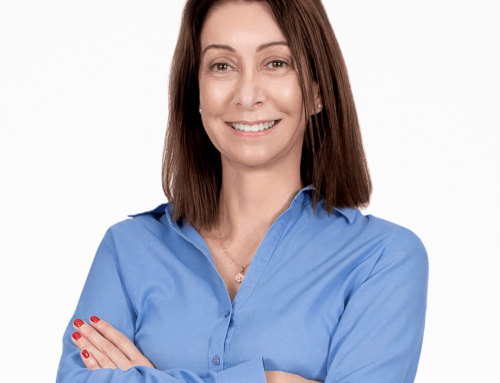
Alma Okpalefe is Executive Director of the World Space Week Association, where she leads the world’s largest initiative for space outreach and public engagement, coordinating collaboration between governments, industry, educational institutions and communities in over 100 countries.
Her career combines law, space policy, organisational strategy, leadership, innovation and ecosystem development, with a particular focus on international cooperation and the strengthening of institutions capable of responding to current challenges and maintaining their long-term relevance.
She has recently been recognised as one of the 100 most outstanding women in the aerospace and aviation sector.
Year after year, Seville has proven to be the most active city in Spain during World Space Week. From the perspective of the World Space Week Association, how is the impact of such an active local ecosystem as Seville’s perceived at an international level?
What is special about Seville is that, unlike many other cities around the world, the participation of the city in the event did not only take place in terms of a one-time or multiple one-off events, but rather developed into a whole local ecosystem. Since participating in World Space Week since 2016, Seville has been able to develop a model of collaboration with public authorities, universities, research institutes, businesses, and community.
From the international standpoint, what makes the case of Seville unique is that it shows how the global initiative can be used as a catalyst to create some lasting effect on the local level. World Space Week is not merely an event that takes place during a week of October. It involves making connections, developing talents, creating partnerships, and creating opportunities. Seville serves as an example of how public outreach can help a city to achieve its goals in the field of space, the case of Seville is an excellent example for other cities around the world.
With Seville’s consolidation as the Spanish Space Capital and headquarters of the Spanish Space Agency (AEE), what opportunities do you see for the city to lead new initiatives in science outreach and diplomacy in southern Europe?
I believe Seville is in a particularly interesting position to connect science, industry and international cooperation. With the Spanish Space Agency headquartered in the city, and an ecosystem bringing together universities, research institutions, businesses and public authorities, there is an opportunity to develop initiatives that extend beyond Spain and engage the wider southern European and Mediterranean region. World Space Week can provide a platform for bringing these stakeholders together, encouraging scientific exchange, promoting talent development and creating opportunities for international collaboration.
The possibility of Seville using its growing space identity to facilitate conversations between different countries, institutions and communities is particularly exciting. Science outreach can be an important instrument of diplomacy because it creates a common ground on which people can collaborate, regardless of their national backgrounds. Seville has the foundations to develop initiatives that combine public engagement, education and international cooperation, while demonstrating how space can contribute to economic development and shared opportunities.
One of the main objectives of your leadership is to democratise access to space-related knowledge. How can cities with strong cultural and historical roots, such as Seville, balance tradition with the promotion of scientific and technological vocations (STEM)?
I do not believe that tradition and scientific progress are mutually exclusive. In fact, cities such as Seville, with their rich cultural and historical heritage, have an opportunity to use that heritage as a starting point for engaging people with science and technology. The history of exploration, navigation, and the quest of humans to understand the universe around them can be used as a bridge between past and future. The challenge is to make science accessible and relevant to people, rather than presenting it as something distant or reserved for a select group.
For me, democratising access to space-related knowledge means ensuring that a young person does not have to come from a particular background, attend a particular school or live in a particular country to see themselves as part of the space sector. Cities can achieve this by bringing scientific experiences into schools, communities, cultural spaces and public programmes, while connecting education with real opportunities in industry and research. The objective is not to replace a city’s identity with a technological one, but to expand that identity and give the next generation new ways to participate in its future.
You have recently been recognised as one of the Top 100 Women in Aerospace & Aviation. What message would you give to young women from Seville and Andalusia who aspire to lead the aerospace sector, a field traditionally dominated by men?
I would tell young women that they should not allow the fact that a field has traditionally been dominated by men to determine whether they believe they belong in it. The aerospace sector requires a diversity of skills, perspectives and experiences, not only in engineering and science, but also in law, policy, business, management and international cooperation. My own career has demonstrated that there are many different pathways into the space sector, and that leadership can and should take different forms.
I would also encourage them to be intentional about developing their expertise, building relationships and seeking opportunities to contribute, even when the path is not always clearly defined. Recognition is encouraging, but I believe the greater responsibility is to help create an environment in which the next generation does not have to spend so much time questioning whether there is a place for them. We need young women not simply to aspire to participate in aerospace, but to see themselves as the people who will shape its institutions, its businesses and its future.
You have extensive legal and strategic experience in the satellite industry. What role do medium-sized cities and regional hubs play in shaping the new global space economy (New Space)?
Medium-sized cities and regional hubs have a particularly important role to play in the new space economy because the growth of the sector cannot be sustained by infrastructure and investment alone; it requires an ecosystem capable of converting those assets into economic and institutional capacity. My research into the dynamics of the space industry in emerging economies has reinforced my interest in how these ecosystems develop, and in what I would describe as a minimum viable ecosystem for growth: the combination of institutions, talent, businesses, finance, supportive policy and collaboration necessary for an industry to begin developing sustainably. A regional hub does not necessarily need to replicate the capabilities of an established space power. It needs to identify where it can contribute meaningfully and build the relationships and capabilities around that opportunity.
For cities such as Seville, this creates an opportunity to connect established industrial capabilities with emerging space businesses, universities, research institutions and public authorities. These connections can support innovation, entrepreneurship, workforce development and access to international markets. The legal and strategic dimensions are also important: businesses need appropriate regulatory frameworks, predictable institutions and pathways for collaboration, if they are to move from research and experimentation towards actual commercial activity.
Ultimately, I believe the new space economy creates an opportunity to rethink where growth happens. A city does not have to be the largest or most established space centre to become an important node in the global ecosystem. What matters is its ability to identify its strengths, assemble the essential elements for growth and connect those capabilities to wider regional and international networks. Seville demonstrates how a regional hub can use its existing assets and a clear strategic vision to develop a meaningful position in the global space economy.
Seville’s business and research community is growing rapidly. What do you consider to be the key regulatory or governance measures that local ecosystems should adopt to attract greater international investment in the space sector? We have an ESA-BIC (business incubator); based on your experience as a driver of entrepreneurship in the space sector, what recommendations or best practices would you offer to maximise its impact?
The starting point is to recognise that attracting international investment requires more than having good research institutions, an incubator or even a strong industrial base. You need an enabling environment for entrepreneurship, supported by clear and predictable regulation, effective governance, access to finance, talent and pathways to market. From my experience in the satellite industry, investors need confidence not only in the technology, but also in the institutions, the regulatory framework and the commercial environment in which a business will operate. Seville has important foundations, including its growing research and business community, the Spanish Space Agency and ESA BIC Andalusia. The opportunity is to ensure that these elements work together as an end-to-end ecosystem, where one intervention feeds into another, from research and incubation through to commercialisation, investment and international market access.
We need to ask- are we actually creating businesses that generate revenue, attract investment, secure customers and become sustainable? Is there a clear pathway from the incubator into procurement opportunities, industrial partnerships and international markets? These are important questions because entrepreneurship is not simply about creating companies; it is about creating companies that can survive and grow. The ecosystem must be designed so that success at one stage creates opportunities for the next.
Finally, we need to pay much greater attention to how entrepreneurial success is communicated. It is important to celebrate success, but also to communicate the realities of building a business in the space sector: the challenges, the setbacks, the lessons and the milestones. How are these stories reaching the wider public, young people, potential entrepreneurs and investors? If we want to inspire the next generation, they need to see not only the achievements of established space companies, but also the journeys of emerging businesses and the people behind them. Celebrating and communicating those stories helps build confidence, attract talent and strengthen the ecosystem itself.
World Space Week is the sector’s largest public outreach event on the planet. What are the main organisational challenges facing the association in maintaining the general public’s interest in an age of information overload?
Our challenge is to move beyond communicating about space to communicating why space matters to people.From an organisational perspective, this requires us to bring together a diverse global community of national coordinators, educational institutions, industry, governments and volunteers, while ensuring that the message remains coherent but locally relevant. We are primarily a volunteer-led association, so sustaining participation, supporting our coordinators and mobilising partners across different countries and time zones requires considerable coordination. We also have to continually find new ways to engage audiences, particularly young people, through formats and experiences that encourage participation rather than passive consumption.
Ultimately, I believe the answer lies in making World Space Week an ecosystem rather than simply an annual event. We need to create opportunities for people to experience space, ask questions, develop skills and see themselves as participants in its future. And just as importantly, we must communicate and celebrate the successes of that engagement. When a student discovers a new vocation, a school develops a lasting programme, or a local community builds a partnership, those stories need to be shared. They demonstrate the real impact of World Space Week and help ensure that public interest translates into sustained engagement beyond 4–10 October.
Looking ahead to the future of the association under your leadership, what sort of joint projects or strategic partnerships would you like to see emerge between the organisation you lead and the City of Seville?
One of the things I would be particularly interested in is developing Seville as a model for municipal-level participation in World Space Week. The city’s experience demonstrates how sustained institutional commitment, local coordination and collaboration between different stakeholders can transform a global initiative into something with lasting local impact. We could explore a framework through which other municipalities learn from Seville’s experience, adapting the approach to their own economic, educational and institutional realities.
Ultimately, I would like our partnership to demonstrate that cities do not have to wait until they become established space hubs to participate meaningfully in the space economy. Through World Space Week, they can begin building the relationships, developing the talent and creating the public interest that make such growth possible.
The theme of this year’s World Space Week is ‘Rocket Revolution’. At a time when access to space is becoming more widespread thanks to new launch systems, how do you think local events — such as those organised by Seville — can help explain this ‘revolution’ to the public so that they understand that space is closer to their lives than it seems?
I believe local events, particularly those organised in a city like Seville, have an important role in making the Rocket Revolution tangible to the public. It is not simply about explaining how rockets launch or how we get to space, but about helping people understand what happens once a payload reaches orbit. What does that satellite deliver, how does it affect my daily life, and what is its impact at the last mile?
Increased access to space has the potential to improve the services we depend on every day, from communications and navigation to weather forecasting and environmental monitoring. We need to tell those stories in ways that people can relate to, demonstrating that space is not something distant or abstract. It is already connected to how we live, work and communicate, and the Rocket Revolution is about expanding those possibilities.
The ‘Rocket Revolution’ also celebrates the transformation of space transport and infrastructure. Given that Seville is a historic hub for the aeronautical industry and an emerging centre for the space sector in Spain, what strategic role do you think regions with this industrial heritage play in the supply chain of this new era of global launches?
The opportunity goes beyond manufacturing rockets or launch infrastructure. As access to space expands, there will be growing opportunities across the wider value chain, from components and advanced materials to software, satellite integration and the services delivered through orbital infrastructure. The challenge for regions like Seville is to ensure that their industrial heritage becomes a platform for future growth, rather than simply a legacy of past achievement. By connecting those capabilities to entrepreneurship, investment and international markets, Seville can strengthen its contribution to the global space economy.
From the perspective of the World Space Week Association, what factors have enabled Seville to become an international benchmark for World Space Week, and what opportunities do you see for further strengthening that leadership in the coming years?
What has enabled Seville to become an international benchmark for World Space Week is its integrated approach to participation. Rather than treating it as a series of individual events, the city has brought together public authorities, universities, research institutions, businesses and the wider community around a common initiative. This creates continuity, strengthens collaboration and allows the impact of World Space Week to extend beyond the week itself.
Looking ahead, I believe one of the opportunities to strengthen that leadership is to make greater use of the media. We need to communicate not only what is happening, but also the people, partnerships and successes behind it. This would help bring the space sector closer to the public, inspire young people and demonstrate the value of Seville’s ecosystem internationally. There is also an opportunity for Seville to share its model with other cities around the world, showing how municipal leadership can translate participation in a global initiative into lasting local impact.
Throughout World Space Week, you will have seen particularly successful initiatives in other cities or regions around the world. Could you share some examples that have had a significant impact on public, educational or business participation and which, in your opinion, could be adapted and implemented in Seville?
There are valuable lessons to draw from different parts of the world. SUPARCO in Pakistan has an excellent mechanism for coordinating World Space Week activities across the nation, while Saudi Arabia, through its Ministry of Education, has an impressive mechanism for engaging schools at scale. These are examples of how institutional support and established networks can significantly expand participation.
But honestly, I believe Seville is in a class of its own when it comes to city-wide participation. I actually mentioned Seville to the organisers of Seattle Space Week, who are attempting a similar approach this year. Seville is a trailblazer in its own right, and I think there is an opportunity for the city to share its experience with other municipalities seeking to build an integrated space ecosystem. The lesson is not necessarily to replicate Seville’s model exactly, but to understand how its stakeholders have come together, created continuity and made World Space Week part of the city’s identity.