
Space startups are key to ensuring that, from Seville, the Spanish Space Capital, we turn the potential of Seville and Andalusia into a business reality with international reach.”
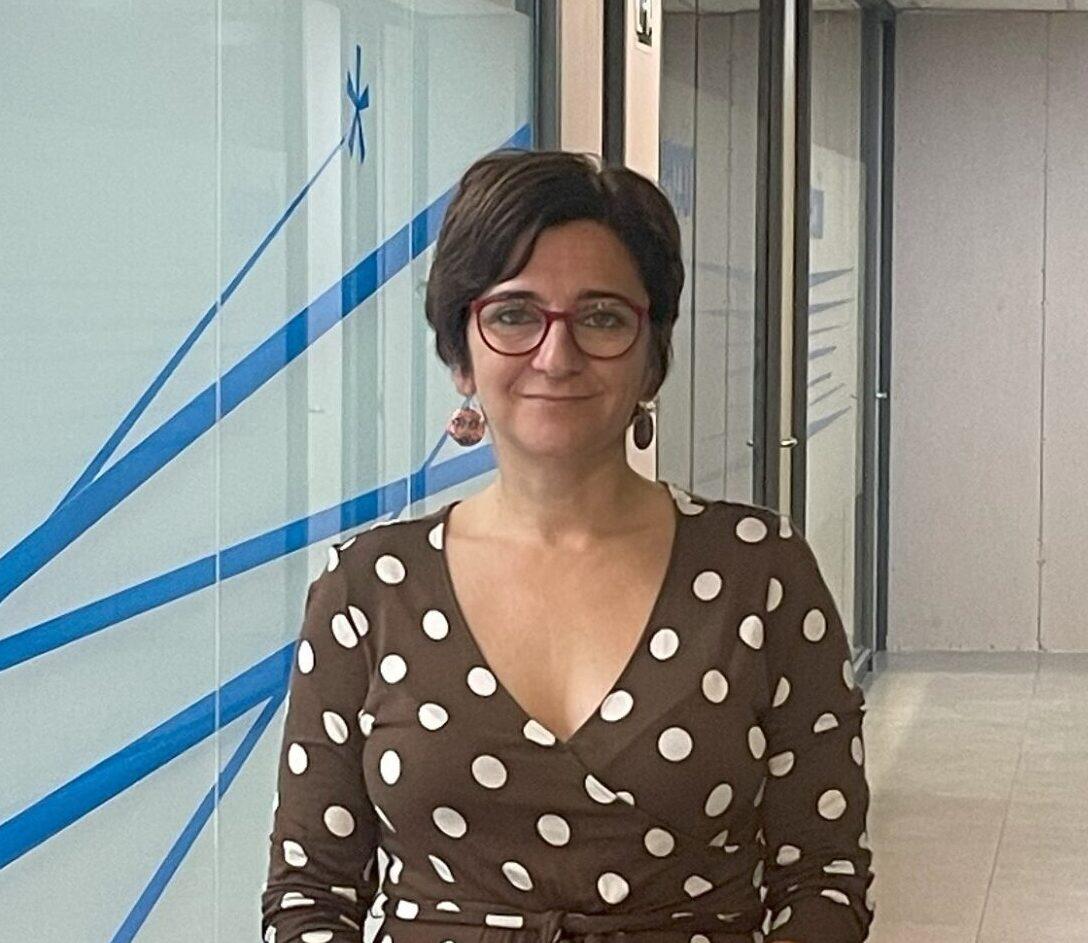
Gracia Catalina Piñero is a Telecommunications Engineer and Manager of ESA BIC Andalusia, the European Space Agency’s startup incubator in the region. The program is managed by CATEC and supported by the Spanish Space Agency, the Regional Government of Andalusia, and the City Council of Seville. From CATEC, she leads the launch and management of this initiative, aimed at supporting space-related startups and strengthening the entrepreneurial space ecosystem from Seville and Andalusia to Europe.
She has more than 20 years of experience in innovation, technology entrepreneurship, and business ecosystem development, with a career focused on supporting startups, technology transfer, and fostering connections between public administrations, corporations, universities, and innovation ecosystem stakeholders. For more than a decade, she directed the Minerva Program, one of Spain’s leading technology accelerators, promoted by Vodafone and the Regional Government of Andalusia, through which she supported hundreds of entrepreneurial projects in their growth and market access.
Throughout her career, she has received several distinctions, including the Andalusia Capital Award for Andalusian Talent, the ROMA Award in the STEM category, and recognition as one of the 100 Leading Women in Andalusian Industry, honors that highlight her contribution to entrepreneurship, technological innovation, and female leadership in strategic sectors.
Seville is establishing itself as a benchmark in the space industry. How do you assess the current state of space entrepreneurship in the city, and what opportunities does it offer for new projects or startups?
I view it very positively. Seville is experiencing a particularly significant moment for the space industry and for the entire innovation ecosystem developing around it. We are facing an enormous opportunity for the city, for Andalusia, and for the Spanish space sector as a whole.
For decades, space was primarily associated with large agencies, major contractors, and highly complex technological programs. That remains essential, but the landscape has changed: access to space is becoming democratized, opening a new universe of opportunities for startups, SMEs, and technology spin-offs.
Space is no longer just a destination; it is a strategic infrastructure for the economy, security, sustainability, and competitiveness.
Seville starts from a strong position, with a recognized aerospace tradition, industry, technology centers, universities, and specialized talent. Many capabilities traditionally developed in aeronautics—advanced manufacturing, materials, robotics, critical software, unmanned systems, structures, testing, communications, and automation—naturally intersect with the space sector. In this context, ESA BIC Andalusia was created to help transform ideas with technological and business potential into solid, scalable companies connected to Europe.
ESA BIC Andalusia has become a platform for supporting innovative startups. What aspects and criteria are especially important when selecting companies for the incubation program?
ESA BIC Andalusia is the European Space Agency’s business incubation center in Andalusia. It is managed by CATEC, the Advanced Center for Aerospace Technologies, and supported by the Spanish Space Agency, the Regional Government of Andalusia, and the City Council of Seville. We operate under European standards and according to criteria shared across the ESA BIC network.
There are two very important initial requirements. First, the company must be less than five years old, or the founding team must be in the process of establishing it. Second, there must be a clear connection to space, either upstream—technology, products, or services for the space sector itself—or downstream—the use of space technologies, satellite data, navigation, communications, or technology transfer to address challenges in other markets.
From there, we look for projects with a strong team, vision, market opportunity, business model, execution capability, and scalability potential. Technology is essential, but it must serve a real business opportunity.
At ESA BIC Andalusia, we do not incubate isolated ideas; we foster companies capable of growing in a global market.
The evaluation process analyzes the team’s experience, the space connection, technical feasibility, value proposition, market, revenue model, financial strategy, risks, and incubation plan. It is a demanding process, but also extremely useful in helping startups organize their proposals and prepare to compete internationally.
What are the main challenges space startups face during their first years, and how does ESA BIC Andalusia help them overcome these challenges?
Space startups face significant challenges from the earliest stages. The first is market access: having a good technological solution is not enough. Companies must understand how the sector works, identify key stakeholders, reach customers, and build credibility in a highly specialized, regulated, and demanding environment.
Another major challenge is financing. In many cases, these companies need to develop advanced technology before generating recurring revenue. It is also critical to achieve product-market fit and transform a technological solution into a clear, differentiated, and viable commercial offering.
ESA BIC Andalusia supports startups in all these areas through an incubation program lasting up to 24 months. Selected companies receive €60,000 in non-repayable direct funding, co-financed by the European Space Agency—through the contribution of the Spanish Space Agency—and the Regional Government of Andalusia. This is complemented by 80 hours of specialized mentoring, technical support, business advice, legal consultancy, and intellectual property assistance.
In addition, startups are provided workspace at the San Jerónimo Renfe Buildings in Seville, made available by the City Council of Seville and located just a few meters from the headquarters of the Spanish Space Agency. They also become part of the European ESA BIC network, an international community linked to ESA that provides access to knowledge, contacts, collaboration opportunities, and growth prospects.
Within this support framework, the role of CATEC is particularly significant. As the managing organization of ESA BIC Andalusia, it provides direct access to advanced technological capabilities and a well-established industrial network. For a startup, being able to validate its development with one of Spain’s leading aerospace and defense technology centers represents a substantial competitive advantage.
This is not just about incubating projects; it is about accelerating space companies with a real capacity to compete, scale, and create impact from Andalusia.
What impact is ESA BIC Andalusia having on Seville’s strategic positioning as an innovation ecosystem and as a leading hub for the space industry nationally and internationally?
ESA BIC Andalusia is helping position Seville as a key hub for space entrepreneurship in Spain and Europe. Its location at the San Jerónimo Renfe Buildings, just a few meters from the headquarters of the Spanish Space Agency, creates concentration, visibility, and a true sense of ecosystem.
Furthermore, ESA BIC Andalusia has a regional vocation. We are attracting talent and projects from different Andalusian provinces, and even from outside Andalusia, that see Seville as a place from which to develop technology, connect with Europe, and grow within the space market.
There is also a highly favorable national context. Spain has made a historic leap in its space ambitions and has become the fourth-largest contributor to European Space Agency programs, alongside Germany, France, and Italy. This will have a significant impact on industrial opportunities, technology programs, and the ability of Spanish companies to participate in European value chains.
Seville cannot remain on the sidelines of this wave. On the contrary, it must be at the forefront.
ESA BIC Andalusia helps translate this ambition into new companies, qualified employment, technological capabilities, and international collaboration opportunities originating from Andalusia.
The Space Forum meetings are becoming established as a gathering point for industry stakeholders. How are these events helping to bring ESA BIC Andalusia’s work closer to the community and generate new collaboration opportunities?
The Space Forum has become a highly valuable tool because it brings together stakeholders with a shared focus: the development of the space sector in Seville and its national and international projection.
At the beginning of May, we held a Space Forum meeting at the Renfe Buildings themselves, home to ESA BIC Andalusia, where our first incubated companies were able to present themselves to different ecosystem stakeholders. It was an excellent opportunity to showcase talent, foster conversations, and open the door to potential collaborations.
The six startups that have begun incubation at ESA BIC Andalusia are Hisperion, OLMA Space, OBA – Orbital Boost Aerospace, Albor Space, YNSAT, and Graniot. Four of them are upstream companies and two are downstream, which reflects the diversity of the new space entrepreneurship landscape: from mission simulation, advanced coatings, orbital logistics, satellite communications, and NTN systems, to remote-sensing applications for mining, environmental monitoring, agriculture, vegetation, and infrastructure.
The Space Forum makes the ecosystem tangible: it brings people into the same room and accelerates conversations that can evolve into projects.
The initiative “Seville, Spanish Space Capital” aims to showcase the sector’s progress and achievements. How does this platform contribute to promoting ESA BIC Andalusia’s work and the success of the companies incubated within the ecosystem?
Seville, Spanish Space Capital is carrying out extremely important work in terms of visibility, storytelling, and positioning. In strategic sectors such as space, effective communication is also a way of building an ecosystem. We need citizens, companies, public administrations, investors, and young talent to understand that space is not something distant, but rather a real industry with economic, technological, and social impact.
For ESA BIC Andalusia, this platform is a natural ally. It allows us to bring our work closer to the public, increase the visibility of incubated startups, and demonstrate that companies capable of competing in the European space sector are already emerging in Seville and Andalusia.
Moreover, this is a particularly opportune moment to attract new applicants. The ESA BIC Andalusia call for applications is currently open, and the next submission deadline is October 30, 2026. Interested startups can consult the requirements and application process on the program’s website.
We want any entrepreneur or startup with a clear connection to space to know that Andalusia offers a gateway into the European ESA network.
The latest Space Forum allowed incubated companies to exchange experiences and receive direct guidance from Gonzalo García Julián, founder and CEO of Markentry USA. What collaboration and project-development opportunities are emerging from these meetings?
Space companies are international by nature from day one. The space market is inherently global, and it is essential for startups to understand how to access other ecosystems, position themselves effectively, and establish commercial relationships in strategic markets.
In this regard, benefiting from Gonzalo García Julián’s experience and knowledge of the North American market provides tremendous value. The United States is one of the world’s major space markets, but it is also a complex, highly competitive environment with its own dynamics.
These meetings generate very tangible opportunities: contacts, learning, potential commercial partnerships, market identification, strategic reflection, and connections with experts who can open doors. They also foster something less visible but equally important: an international mindset.
Well-directed networking is not simply an exchange of business cards; it is a lever for business growth.
We are at a decisive moment. Spain has strengthened its position within the European Space Agency, the Spanish Space Agency is headquartered in Seville, and Andalusia possesses a strong aerospace foundation on which to build new space capabilities. Opportunities like this do not come along every day.
The Space Forum is proving to be a highly valuable tool because it brings together stakeholders who share a common focus: the development of the space sector in Seville and its national and international projection.