
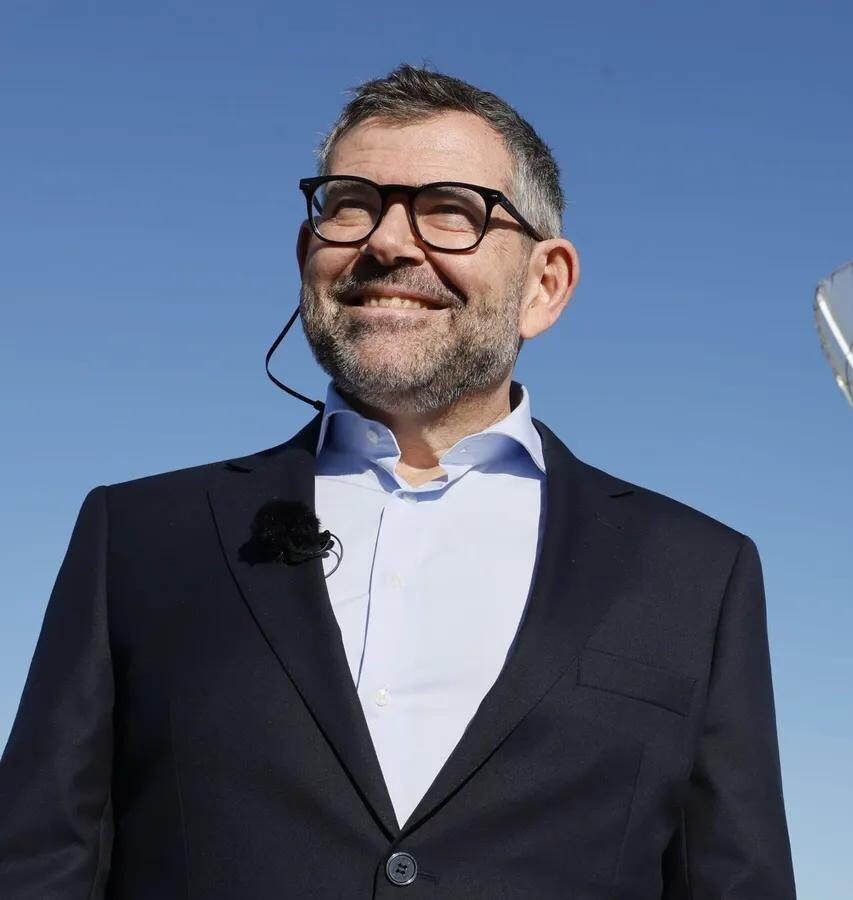
“Seville, Spanish Space Capital is much more than outreach: it is a city strategy”
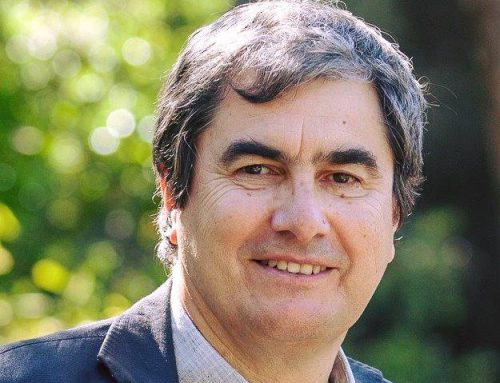
Rafael Vázquez Valenzuela is Professor of Aerospace Engineering at the University of Seville, where he has taught orbital mechanics and spacecraft dynamics for the past twenty years. He holds degrees in Industrial Engineering and Mathematics from the University of Seville and earned his PhD in Aerospace Engineering from the University of California San Diego. His research spans control theory, astrodynamics and space surveillance, with projects funded by the European Commission, the European Space Agency and the United States Air Force Office of Scientific Research (AFOSR). He heads the Indra Chair in Space Surveillance and coordinates the Master’s Degree in Space Systems Operations. He is a Senior Editor of the journals Automatica and IEEE Control Systems Letters and has supervised six doctoral theses, with seven more currently under way.
The University of Seville is one of the pillars of Andalusia’s space ecosystem. What role does it play in developing the city’s space sector?
The University’s fundamental role is talent development: almost every engineer working in Seville’s space sector has studied in our classrooms—and not only in aerospace engineering, since satellites also involve electronics, software and telecommunications. In addition to undergraduate education, we now offer the new Master’s Degree in Space Systems Operations (MOSE), which I coordinate, and we have a strong pipeline of doctoral researchers working in areas such as space surveillance, guidance and control, and astrodynamics. We also have industrial PhD projects under way with Sener and the Royal Institute and Observatory of the Spanish Navy, while companies such as Indra fund a chair at the School devoted to space surveillance, which I head.
There is also plenty of activity beyond the classroom: associations such as FyCUS—the only Spanish team to become a finalist in the NASA Space Apps Challenge—and Coheteros US, as well as genuine entrepreneurial ventures. SolarMEMS, a University spin-off, is a world leader in sun sensors for small satellites; and Hisperion Aerospace, founded by three doctoral researchers from my group, has just joined ESA BIC Andalucía with its mission-simulation software. Vocation, education, research and business: the University is present throughout the entire value chain.
Based on your teaching and research experience, how has students’ interest in space-related careers evolved in recent years?
Interest in space has always been high; it is one of the few disciplines in which a sense of vocation comes as standard. But in recent years, it has risen to another level: the Spanish Space Agency being headquartered here in Seville, the new Spanish astronauts, the return to the Moon through Artemis… There is a very tangible hunger for space.
I see it in the classroom: students on the Aerospace Engineering degree sometimes come away wanting more, because the undergraduate programme only covers space to a limited extent. They then seek out master’s degrees, final-year projects and PhDs focused on space. That unmet demand is partly what led us to launch MOSE, which will reach full capacity this year.
What skills and professional profiles are currently in demand in the aerospace and space industries?
The short answer is: all of them. The sector is expanding and absorbing a wide variety of profiles—aerospace engineers, of course, but also electronics, computer, telecommunications and industrial engineers.
If I had to highlight the areas with the strongest demand, they would be guidance, navigation and control (GNC); space surveillance and space debris; systems engineering; and, increasingly, the intersection with artificial intelligence, both for processing sensor data and for giving vehicles greater autonomy. Operational profiles are also needed: people capable of flying a satellite, which is the gap that MOSE addresses.
And there is something that is not always mentioned: the industry places great value on a solid foundation in mathematics and physics. Tools change; fundamentals do not.
Your career includes studying at the University of California San Diego. What lessons from that experience could be applied to Seville’s space development?
Interestingly, my PhD in San Diego had nothing to do with space: I worked on the control of turbulent flows. But that makes the lesson even more relevant. San Diego is the Silicon Valley of biotechnology: a city that chose its niche wisely and became a global benchmark, with the university acting as a driving force and a constant flow of people and ideas between the campus, companies and government agencies.
Seville does not need to compete in every area; it needs to choose its niches—such as space surveillance, operations or small satellites—and excel in them. And in San Diego, no one finds it unusual for a professor to start a company or for a company to fund a university chair. That fluid exchange is what allows a sector to grow, and I am pleased that it is beginning to happen here. As I mentioned earlier, three of my doctoral researchers have just founded their own space company.
You have had the opportunity to gain first-hand insight into projects related to the Artemis mission. What does this mission mean for Seville’s space sector?
Artemis marks the return to the Moon—this time to stay—and Seville is not merely a spectator. At the University, we have collaborated with Integrasys in connection with the Artemis II tracking station, and I have supervised student projects involving simulations of Doppler tracking for the mission.
The fact that a student at the School can complete a final-year project on how to track a crewed spacecraft travelling to the Moon from the ground says a great deal about where we are today. Beyond these specific activities, Artemis has an enormous catalytic effect: it generates contracts, technology and, above all, vocations. For today’s students, the Moon is once again a professional destination rather than merely a story from their grandparents’ generation.
How can an initiative such as Seville, Spanish Space Capital help raise the profile of researchers’ achievements?
Seville, Spanish Space Capital is much more than outreach: it is a city strategy that brings institutions, companies and universities together through the Space Forum and is underpinned by tangible assets such as the headquarters of the Spanish Space Agency, the Community of Ariane Cities and the ESA BIC incubator.
Within that strategy, raising the profile of researchers happens naturally. World Space Week has brought our work to thousands of people; events such as the Space Security and Defence Conference have been held at our own School; and the Spanish Space Agency hosts events in Seville such as Zero Debris Week, which focuses precisely on the subjects we research.
When local research forms part of a collective citywide project, it becomes easier to attract investment, retain talent and inspire new vocations. These interviews are a good example: outside academic circles, we are rarely asked about our work.
The Space Forum brings together a wide variety of stakeholders. What is the value of creating spaces for collaboration between universities and industry?
It is immensely valuable. Space is a cutting-edge sector in which research is not an optional extra but a raw material: companies need to solve problems that have not yet made it into the textbooks, while universities need real-world problems if their research is to have an impact.
In my group, this is part of our daily work. I head the Indra Chair in Space Surveillance; we have projects with the European Space Agency and AFOSR, the US Air Force Office of Scientific Research; and several industrial PhDs are under way—one with Sener in guidance, navigation and control, and another with the Royal Institute and Observatory of the Spanish Navy in orbit determination.
None of this happens spontaneously: someone needs to bring the right people together around the same table. That is exactly what the Space Forum does.
What advice would you give to a student who dreams of working on a space mission one day but does not yet know where to begin?
First, build a strong education without taking shortcuts: mathematics, physics and programming. In the age of artificial intelligence, fundamentals are not becoming less important—they are more necessary than ever. Tools can solve an integral or write code for you, but only someone who understands the underlying principles knows how to ask the right questions and recognise when an answer is wrong.
Second, do not wait for permission. There are associations, competitions, CubeSat projects and rocketry initiatives where students can gain genuine hands-on experience in space activities from their very first year at university.
Third, seriously consider pursuing a PhD. It is the natural route for working at the frontier of the field, and many doctoral theses are now carried out in direct collaboration with companies and agencies.
Finally, be patient, and do not abandon the dream simply because it seems unlikely. Twenty years ago, working on a lunar mission from Seville sounded like science fiction; today, I have students doing exactly that. The chances of ending up on a space mission are very low only for those who never try.