
The Spanish Aeronautical Sector Reinforces Its Commitment to Sustainability at an Event Organized by Aertec
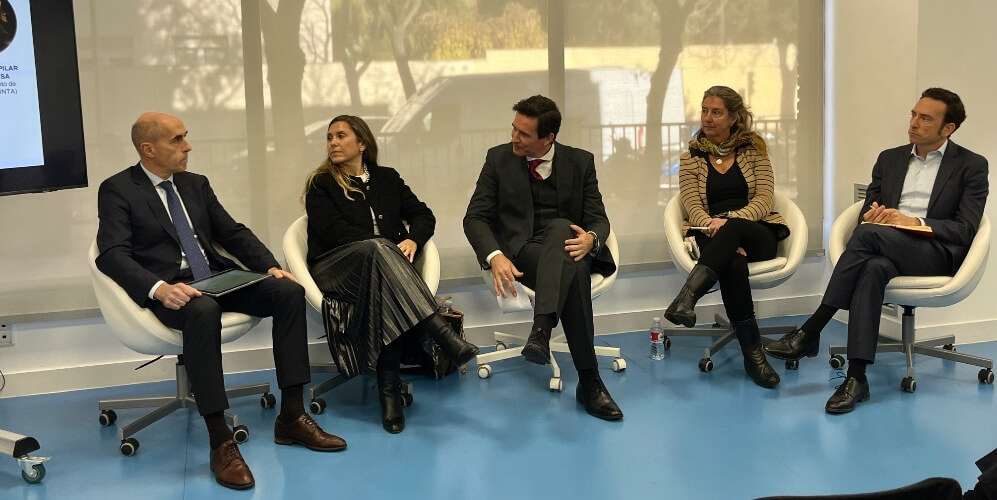
Aertec brought together representatives from INTA, Airbus, and Moeve on Wednesday, November 26, in Madrid for a meeting focused on analyzing the challenges and opportunities that will shape the transition toward a more efficient and sustainable aviation industry. Under the title “The Future of Sustainable Aviation,” the session gathered ministerial delegates, industry professionals, and specialized media, and served to publicly reaffirm the commitment to achieving net-zero emissions by 2050.
The event was opened by Antonio Gómez-Guillamón, CEO and co-founder of Aertec, who reviewed the company’s progress in engineering applied to sustainability. This was followed by a roundtable featuring Susana Carballo, Head of Engineering at Airbus Commercial Aircraft in Spain; Vicente Pérez Mena, Head of Commercial Aviation at Moeve; María del Pilar Argumosa from the Propulsion Department at INTA; and Pedro Becerra, General Director of Aerospace and Defense Systems at Aertec, moderated by Carlos Berenguer, General Director of Aviation at the company.
In his opening remarks, Berenguer expressed regret over the public perception that portrays aviation as “the climate enemy of the 21st century.” He emphasized that the industry maintains a strong commitment to decarbonization and highlighted the importance of sustainability.
The Airbus representative focused on the progress already made. Susana Carballo recalled that over the past three and a half decades, the sector has reduced emissions by 50% thanks to improvements in aerodynamics, engine efficiency, and advanced materials.
Regarding sustainable fuels, Vicente Pérez (Moeve) stressed the importance of SAF, which account for 65% of the emissions reductions expected by 2050.
For her part, Pilar Argumosa (INTA) noted that many of the necessary technologies already exist, and that the key lies in their evolution and maturation.
Pedro Becerra (Aertec) highlighted the efficiency gains achieved by the current generation of aircraft and emphasized ongoing innovations under development.
Participants also addressed the main challenges facing the industry, such as the need to update the regulatory framework to accommodate new technologies and operations, refueling times associated with alternative fuels, and designing an efficient value chain for SAF—from collection to refueling.
The meeting concluded with a joint call for cooperation among all stakeholders to advance aviation sustainability.
Source: Actualidad Espacial