
“We want both companies and citizens to feel that Seville, the Spanish Space Capital, belongs to them — something closely linked to the development of the sector and to the life of the city.”
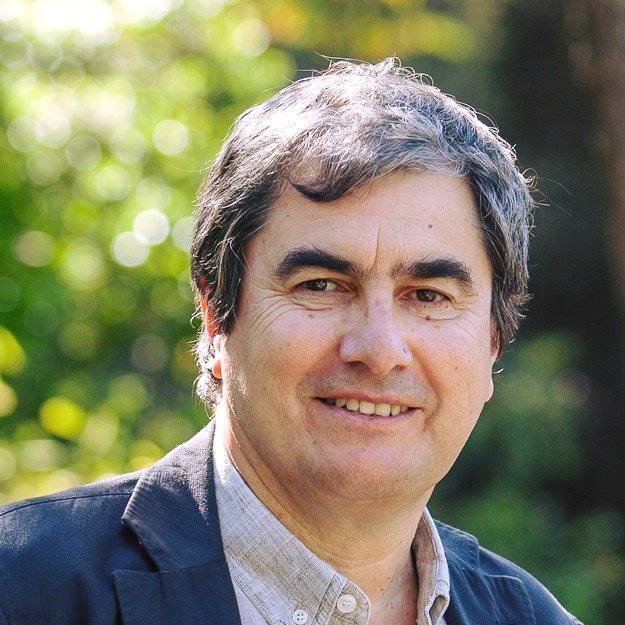
He holds a degree in Biology from the Autonomous University of Madrid and has studied Science Education at the University of Seville. His professional work focuses on environmental education, teacher training, youth participation, and science communication.
He is a member and/or co-founder of several educational and environmental initiatives, including El Molino de Lecrín, El Remolino, the Andalusian Society for the Promotion of Science — where he serves as director of the Science Fair — Educa Punto Ambiental, Argos Proyectos Educativos, and the Historia y Ciudadanía Association. He is currently involved in the Space Forum as coordinator.
In addition, he serves on the Advisory Board of Fundación Esplai, on the Governing Board of the Sierra Norte de Sevilla Natural Park, and collaborates as an Honorary Assistant in the Department of Science Education at the Faculty of Education Sciences of the University of Seville.
You have been coordinating the Space Forum for the past three years. What exactly does this responsibility involve, and what is your actual role on a day-to-day basis?
When I took on the coordination role, I was fortunate to find a well-functioning organization thanks to the leadership of Carlos Gómez Camacho. At first, my work was mainly about support: maintaining that positive momentum and compiling the World Space Week program.
However, everything changed when Seville assumed the presidency of the Ariane Cities Network. The Forum experienced significant growth: the number of participating entities increased, and activities expanded throughout the year.
Today, my role focuses on institutional representation and preserving our participatory model. For this, I rely heavily on the support of Alicia Domínguez and Juana Norte from the City Council, and Silvia de los Santos and Pilar Mena in the technical secretariat, with whom we design the action program and continue driving the Forum forward.
How do you assess the evolution of the initiative since its first edition? What is your overall evaluation of this journey?
Looking back, the first major achievement has simply been our ability to exist while maintaining a collaborative atmosphere and a positive spirit of understanding among such diverse stakeholders. That alone is a success. This has been greatly facilitated by the Forum’s participatory model, which has become the “meeting point” for Seville’s space sector.
If we talk about milestones that have shaped the Forum’s development, beyond its important participation every year in World Space Week, I would highlight the Forum’s role in preparing Seville’s bid to become the headquarters of the Spanish Space Agency.
Another key moment was the major boost provided by Seville’s presidency of the Ariane Cities Community (CVA) during 2024, which also strengthened the city’s international profile.
A third milestone has been moving from very limited digital visibility to having our own website and a constant, growing presence on social media.
What role does the Forum play in the “Seville, Spanish Space Capital” initiative, and how does this help bring science closer to citizens?
“Seville, Spanish Space Capital” is an ambitious project aimed at establishing us as the leading reference point for the sector in Southern Europe. The Forum has been at the heart of this strategy from day one. Our mission is to create a “space atmosphere” throughout the city; we want both companies and citizens to feel this project as something of their own, connected to the development of the sector and to everyday urban life.
You recently joined the “Trio of Eclipses” Expert Committee. What can you tell us about this?
Spain is about to experience something historic: three consecutive eclipses over the next three years. It is a phenomenon that will not happen again for centuries, which is why specific committees have been established at both the national and regional levels. My role is to act as an advisor on the Trio of Eclipses Steering Committee of the Andalusian Regional Government’s Department of University, Research and Innovation.
Our work focuses on using this event to bring astronomy closer to the public, explaining the phenomenon and encouraging interest in science, while also raising awareness about the precautions necessary for safe observation. We also advise public administrations on planning resources for the large crowds and the massive influx of visitors expected from all over the world. Ultimately, the Forum’s presence on this committee will allow Seville’s space sector to contribute its expertise so these events run smoothly and successfully.
What are the next challenges and roadmap for the 2026–2028 period?
Looking ahead to the next three years, the Forum aims not only to maintain its current position but to make a qualitative leap forward. We can identify at least three key areas.
First, consolidating the participatory model by strengthening our structure as a public-private collaboration instrument. The challenge is to attract the new companies being created or relocating to the city and, above all, to involve new sectors of civil society that are still unaware of the importance of space for Seville.
Secondly, we will continue supporting the “Seville, Spanish Space Capital” project by promoting internationally the idea that Seville is the ideal place for the development of the space industry.
Finally, in the area of outreach, we must spark scientific and space-related curiosity among younger generations, with a very clear focus: encouraging professional vocations among girls. The future of space in Seville must be diverse and include all available talent.
How do you explain to ordinary people that the space industry affects their everyday lives?
We need society to perceive the space sector as something close and relevant — to understand how investment in the space industry facilitates the tasks we perform every day. What would modern life be like if satellites suddenly stopped working tomorrow?
We must communicate that the space industry is the invisible engine that keeps our economy running. Every time we use Google Maps, make a bank transfer, or check the weather forecast for the weekend, we are using space technology.
Space is also the most advanced laboratory we have for monitoring climate change, achieving medical breakthroughs, developing new materials, and managing natural disasters.
Moreover, it is essential for the people of Seville to feel proud knowing that navigation software and critical components for international satellites are designed and manufactured right here in companies based in Seville. It is important for space to become part of the city’s identity.
If you could travel through time, how would you like to see Seville positioned on the space map ten years from now?
I imagine a city that has made space — together with innovation and science — a driving force of its identity and prosperity. I would like “space” to become part of the image Seville projects to the world.
I would also like Seville to become the beacon of science and space outreach in Spain. To achieve this, it would be essential to restore the Pavilion of the Future at La Cartuja as the National Space Museum; this would connect the legacy of Expo ’92 with the city’s space-oriented future.
On a more philosophical or utopian level, I would like Seville to lead a new way of understanding space exploration: as a space for encounter, progress, and harmony, far removed from confrontation. I would like it to become the “ethical capital” of space, where the projects born here help address humanity’s greatest challenges.