

“Seville as the Spanish Space Capital has a strong impact on the international market, projecting the city as a consolidated hub.”
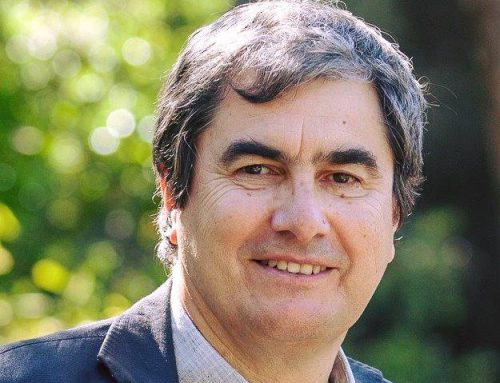
An aerospace engineer, executive, and entrepreneur, he has lived in Washington, DC since 2004.
He led, from its creation and for 9 years, the operations of the U.S. subsidiary of the Spanish company GMV, securing contracts worth tens of millions of dollars with NASA and other leading public and private organizations in the United States, while building a local engineering team of 60 people.
He was founder and president for 10 years of the US Spain Executives Community, a nonprofit organization that connects entrepreneurs, executives, and business leaders from the United States and Spain to create business opportunities and strengthen networking within this community. He is currently a member and collaborator of its leadership team.
Since 2014, he has been founder and CEO of Markentry USA, a consultancy that has supported numerous Spanish companies in their entry, establishment, and growth in the North American market. In this role, he advises Spanish companies—particularly in the aerospace and technology sectors—leveraging his extensive experience in facilitating strategic connections and shaping international expansion and business plans.
How did you experience your arrival in the United States and your adaptation to the space sector there? What key differences would you highlight compared to Spain?
I arrived in the United States in 2004 to lead, from scratch, the operations of GMV’s U.S. subsidiary, focused on the space sector and aimed at commercializing its satellite control center products and services for both institutional clients (NASA and other government agencies) and commercial clients (major satellite manufacturers and operators). It was an extremely challenging endeavor, but we successfully overcame it thanks to the excellent work of both the local and Spanish teams.
As expected, the market I encountered was very different from the European one, both in size and structure. The U.S. space market is about 100 times larger than Spain’s and roughly four times larger than the EU’s. It also presents significant entry barriers for foreign companies, such as export control regulations that can indirectly impact technology imports.
At the same time, it is an extremely competitive and dynamic market where entrepreneurship and innovation are highly valued—creating opportunities that we were able to successfully leverage. Finally, it is important to highlight the significant and subtle cultural differences in how business is conducted between Spain and the U.S., something I came to understand deeply over the years.
What has your professional journey in the U.S. been like, and what led you to found USEC? What is its mission?
After 9 years leading GMV’s U.S. operations, I was part of the management buyout of a spin-off focused on the institutional market (NASA and other federal agencies). In 2014, I stepped away from that project and founded Markentry USA, a consultancy focused on helping international companies enter the U.S. market, many of them Spanish and in the aerospace or technology sectors.
Also in 2014, together with a group of Spanish executives and entrepreneurs in the U.S., I co-founded USEC to promote networking and collaboration among leaders with business interests in both countries. I chaired the organization for 10 years until the end of 2024, when I handed over leadership to a new team that continues to create value for this community.
From your experience, what perception exists in the U.S. about Seville’s space ecosystem?
In general, there is still limited awareness in the U.S. about what is happening in Spain—especially at the city level. This is largely due to the size and competitiveness of the domestic market, and the limited media coverage of international developments.
However, Americans involved in international space activities tend to highly value the technological capabilities of leading European players. The success of several Spanish space companies in the U.S. market confirms their competitiveness. Likewise, major programs such as the International Space Station, the James Webb Space Telescope, and Artemis program have included participation from Spanish companies.
What impact can an initiative like “Seville Spanish Space Capital” have on the city’s international positioning?
The “Seville Spanish Space Capital” initiative goes far beyond symbolism—it sends a powerful signal to the international market. When a city presents itself as a country’s space capital and hosts the headquarters of the Spanish Space Agency, it is perceived as a consolidated hub.
This perception is critical for attracting foreign direct investment, hosting European subsidiaries of major U.S. primes, facilitating partnerships with international agencies, and giving local SMEs a recognizable “seal of origin” in key industry forums.
It also generates a strong pull effect on talent, attracting highly qualified engineers and executives. However, such initiatives must be supported by sustained investment in infrastructure, specialized education, and active business attraction policies.
For a company from Seville, what are the key attributes to successfully enter the U.S. market?
It is essential to have a clearly differentiated and validated technical niche, financial capacity to sustain 18–24 months without returns, and a dedicated management team—ideally including a senior executive fully focused on the U.S. market.
A thorough market study is critical, covering customers, competitors, entry barriers, and regulations. Based on this, a solid feasibility study and entry strategy must be defined. Companies must assume that returns may take 3–5 years, rather than 12–18 months.
Cultural and operational adaptation is also key: commercial communication, proposal formats, and credible local presence. Companies should aim to be perceived as a stable American player, not an occasional foreign supplier.
What is the current context of the U.S. space sector, and what opportunities exist for companies from Seville?
The U.S. space sector is experiencing unprecedented growth, reaching around $130 billion in 2025 and growing at over 6% annually. The government market is shifting from traditional contracting to purchasing commercial products and services.
This structural change, along with the rise of LEO constellations and Earth observation services, opens doors that were closed a decade ago.
Opportunities for Seville-based companies lie in niche subsystems, selling to primes through local distributors, and NASA contracts via U.S. subsidiaries.
Seville’s competitive advantages are clear: ESA flight heritage, strong R&D intensity, lower engineering costs, and a highly qualified local ecosystem.
Are there success stories of Seville-based companies in the U.S. market?
One notable case is Solar MEMS Technologies, a spin-off from the University of Seville specializing in MEMS-based solar sensors for satellites. It has delivered hundreds of flight units and works with NASA and other key U.S. clients. Its entry strategy relied on a local distributor—SpaceQuest—allowing growth without immediate establishment in the U.S.
Other examples include Skylife Engineering and Alter Technology, both deeply integrated into the transatlantic value chain.
A different case is Navteca, co-founded by a Seville-trained engineer and established directly in the U.S., working with NASA and recognized as Small Business Subcontractor of the Year.
Key lessons: focus on deep technical niches, choose the right entry strategy, and leverage ESA credentials as a strong reference for NASA and U.S. primes.
What can we expect from your participation in the IV Space Forum Meeting?
I am honored to deliver the keynote at this event.
The IV Space Forum Meeting comes at a particularly timely moment for Seville and the Spanish space sector. The city is consolidating its role as headquarters of the Spanish Space Agency and advancing its “Seville Spanish Space Capital 2025–2028” program.
It will bring together key public and private sector leaders, offering a valuable opportunity to discuss growth strategies and international expansion—particularly into the U.S. market—along with networking opportunities.
My talk will focus on how to access the U.S. space market, covering requirements prior to internationalization, entry barriers, the role of innovation and entrepreneurship, real success cases of Spanish companies, and practical guidance for startups and SMEs.