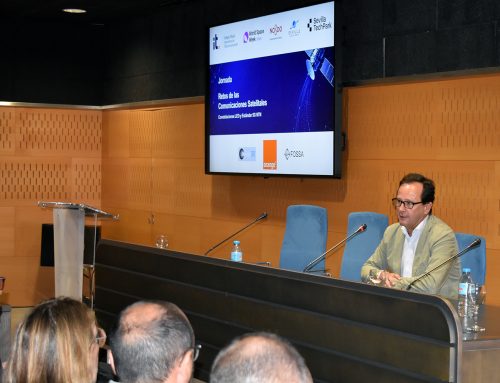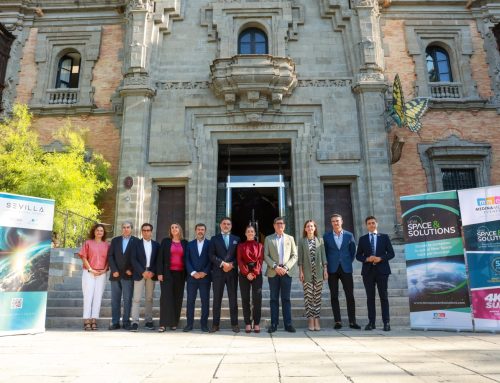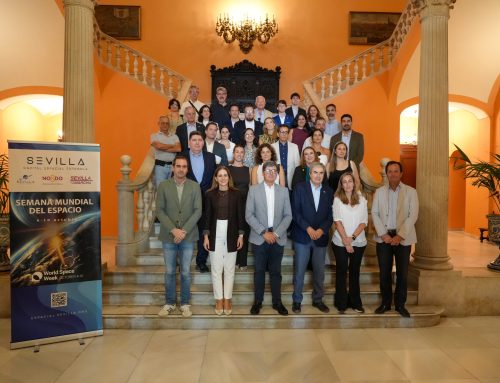

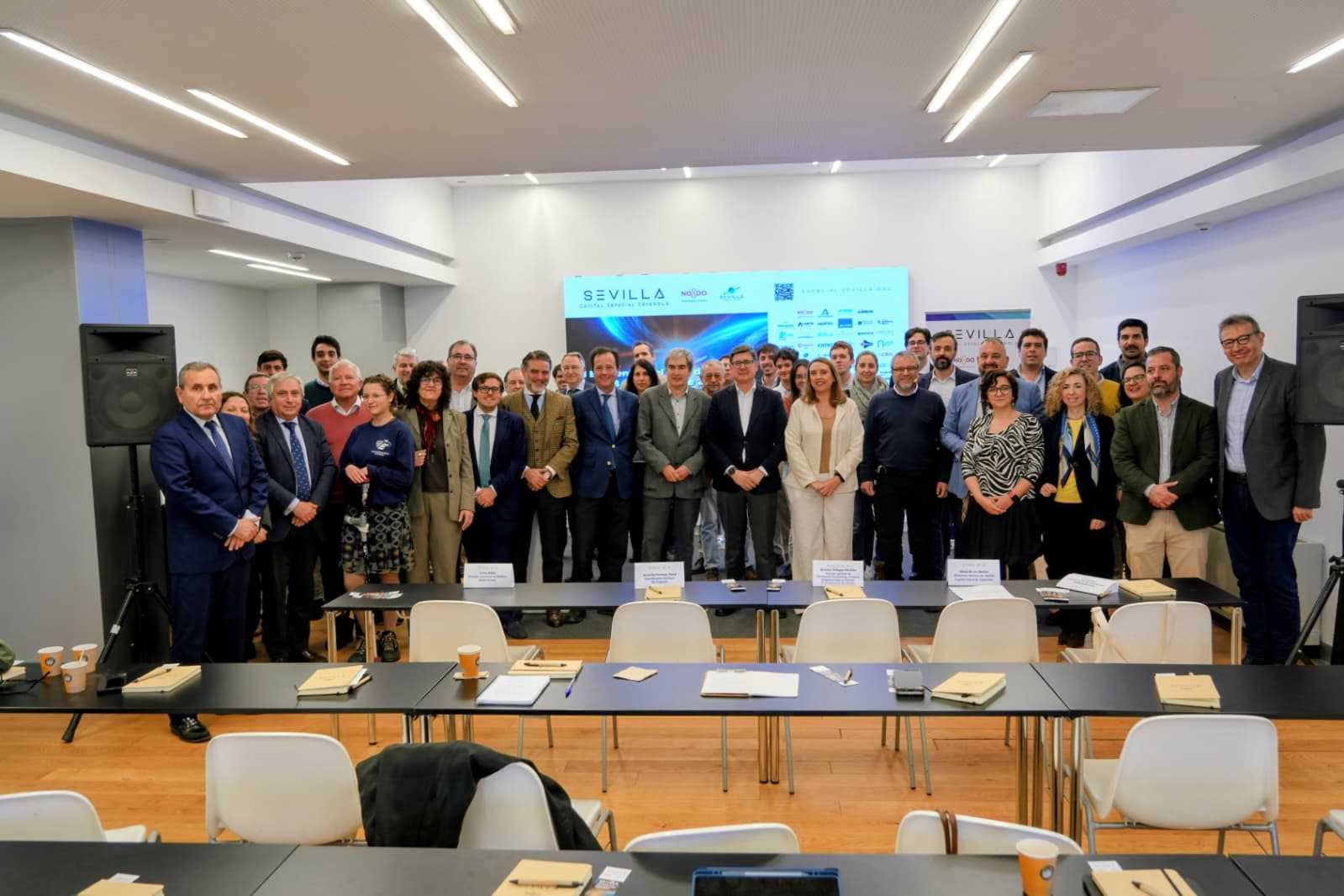
More than 50 public and private entities took part in the third meeting of the Space Forum, held at the Seville Tourist Office, with the aim of reviewing the actions carried out during 2025 and defining the space roadmap for 2026. The Second Deputy Mayor and Delegate for Economic Affairs, Álvaro Pimentel, highlighted Seville City Council’s support for the sector in the city.
“From the City Council, we will continue supporting initiatives that enhance the international projection of our city and strengthen an ecosystem that integrates talent, innovation, and an international outlook,” he added.
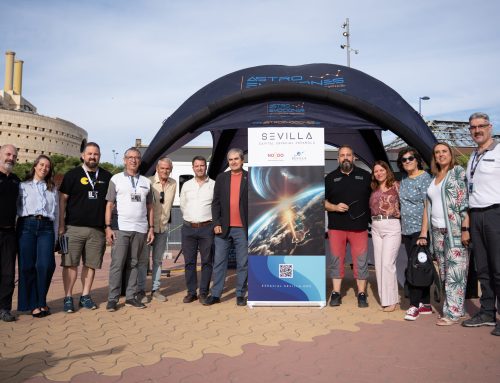
During the meeting, participants outlined the activities that will shape the 2026 space agenda, including the Seville Science Fair (May 6–8) and the New Space & Solutions event (April 14–17). Scientific outreach also played a central role, featuring a public session entitled “Astrophysics with an Andalusian Accent: Emotions, Challenges, and the Future.”
This session brought science and astrophysics closer to the general public in an accessible dialogue format. Hosted by Aitor Inazio, founder of AstroEmociones, and featuring Dr. René Duffard, researcher at the Instituto de Astrofísica de Andalucía (IAA-CSIC) in Granada, the session emphasized a key idea: “scientific outreach is not an add-on; it is a responsibility.”
During his speech, Duffard praised the efforts the city is making to promote space-related activities, noting that “it not only demonstrates a clear commitment to innovation and technology, but also a forward-looking vision that understands the space sector as a driver of economic, scientific, and social development.”
He also stressed that outreach is not the only bridge, but that “the connection between universities, research centers, and companies” is equally important. His own career reflects that connection: in addition to his work at the IAA-CSIC, he is currently involved in projects with the Seville-based company Solar MEMS and previously took part in Dawn, where he programmed the image sequence captured by the spacecraft during its orbit around the asteroid Vesta.
Drawing on that experience, Duffard welcomed the recent involvement of two Seville-based companies, GMV and Alter Technology, in Artemis II, highlighting the growing role of local industry in internationally significant space projects.
Strategic Collaboration Between Research, Industry, and Government
The Instituto de Astrofísica de Andalucía (IAA-CSIC) will launch a new project together with Solar MEMS in which research, industry, and public administration combine to generate high-impact innovation.
This project is part of the InnovAndalucía initiative, launched by the Junta de Andalucía with a €59 million budget to foster business and technological innovation in strategic sectors, including space. The scientist explained that “while Solar MEMS will contribute its expertise in manufacturing Star Trackers—devices that enable precise satellite orientation—the CSIC will focus on analyzing the images obtained.”
For his part, José Miguel Moreno, CEO of Solar MEMS, placed the project within the technological framework of Space Domain Awareness (SDA), focused on detecting objects in orbit—such as active satellites, space debris, fragments, or military satellites—in order to prevent collisions, protect space infrastructure, and strengthen space surveillance.