
“The support of the Seville City Council through Seville, Spanish Space Capital is a clear example of the kind of institutional backing needed to position the aerospace sector.”
“The support of the Seville City Council through Seville, Spanish Space Capital is a clear example of the kind of institutional backing needed to position the aerospace sector.”
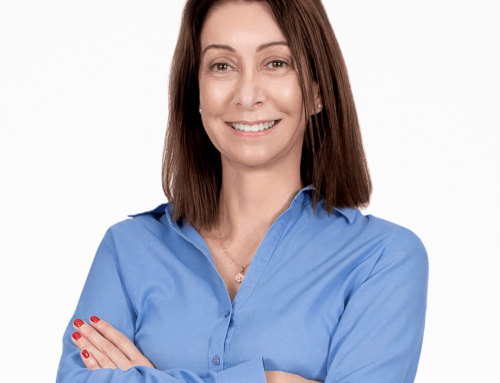
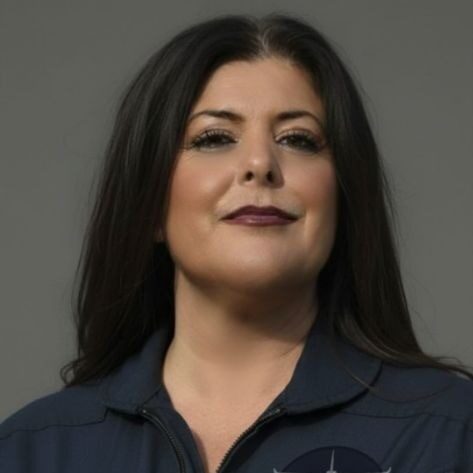
Mariló Torres – analog astronaut and pilot, originally from Córdoba – has been selected as the first Spanish official candidate for commercial/private astronaut in the Space Class 2025 cohort of the U.S. aerospace company Titans Space Industries Inc.
Seville is positioning itself as the Spanish Space Capital. Were you aware of this initiative, and how do you assess its work in promoting the aerospace sector from Andalusia?
The Space Forum, under the auspices of the Seville City Council, is a clear example of institutional support for the sector that should be followed. With greater commitment and recognition from our leaders and public administrations, the Spanish aerospace field will be able to take off and position itself as it deserves. Bringing together more than 50 entities—including large companies, research centers, associations, universities, and foundations—gives an idea of the innovative and technological potential of this strategic framework.
Seville, Spanish Space Capital also aims to bring space closer to the public. In your case, what path leads a journalist and pilot to become a candidate for commercial astronaut and analog astronaut, and what does this experience consist of?
I began by carrying out analog missions—that is, simulated space missions in environments on our planet that faithfully reproduce the conditions of Mars or the Moon—where experiments are conducted and technology is tested, always immersed in a performance that replicates astronauts’ routines and limitations, except for microgravity. I have since been recruited by the U.S. company Titans Space to join its private astronaut corps, and I am now fully immersed in the training and preparation process. My passion for space has been my leitmotif.
What type of missions do you take part in? What lessons do you think could be transferred to initiatives such as Seville, Spanish Space Capital?
During my previous missions, I have collaborated on studies for organizations such as the European Space Agency and the Brazilian Space Agency. In a few days, I will be traveling to the Mars Society Research Station in Utah (USA) to command a crew participating in a NASA neuropsychological research project. I believe the Andalusian aerospace industry could benefit greatly from the knowledge and resources generated by this type of activity.
How do you assess the role of women in the aerospace sector in our region?
In a region considered the third European space hub, female representation is still a minority, at only 20%. This situation does not align with efforts to consolidate a more diverse and equitable industry in Andalusia. That said, I know that organizations such as Andalucía Aerospace, our regional cluster, are actively seeking to promote female talent and its competitive capabilities. The outstanding academic records of female university students in STEM fields should later be reflected in fair and equitable employment opportunities.
Thinking about the aerospace ecosystem developing in Seville and Andalusia, what skills do you consider essential for those who want to pursue a professional career in this sector?
Thanks to its strong export volume and the high level of specialization of its human capital, Andalusia is Spain’s second region in terms of employment and turnover in the aerospace field. Those who wish to build a professional career in this environment must develop a solid multidisciplinary technical foundation and combine it with qualities such as adaptability, resilience, and creativity. This is a context undergoing rapid international transformation, and those who work in a coordinated way with a forward-looking strategy will achieve a brilliant career.
What role do you think Seville can play as a benchmark, thanks to initiatives such as Seville, Spanish Space Capital?
By becoming the headquarters of the Spanish Space Agency in 2024, Seville has established itself as a technological hub with a key appeal for attracting investment and innovation. It has become a nerve center whose leadership will provide an economic and employment boost in the short term. In this fertile environment, local programs such as Seville, Spanish Space Capital help implement this collective effort. In addition, by hosting and organizing top-tier international events such as New Space & Solutions, the impact on the sector is significantly increased.
From your personal experience, what advice would you give to young people in Seville who dream of working in space and now see Seville as a gateway to that future?
I would tell them that we are witnessing the beginning of a great revolution. There is a new space race in which private actors are gaining increasing weight and prominence every day. Companies are collaborating more and more with official agencies in areas such as supply chains, rocket reusability, satellite connectivity, dual-use technologies, and more. They should therefore prepare for a pioneering work environment in which commercial companies—including Spanish ones—will play a role in space exploration and the exploitation of resources beyond our planet.
What project or initiative would you like to lead in the future within the space sector?
For now, my place is within Titans Space Industries, training as a private astronaut for the tourist and scientific orbital flights scheduled to begin operations in 2030. However, I would love to establish synergies with the Andalusian aerospace business ecosystem, or with companies such as PLD, to apply the results of the research carried out during my analog missions. Likewise, it would be a pleasure and an honor to collaborate with the Spanish Space Agency in educating and raising awareness in society about the benefits and importance of space science.
What challenges do you consider key for future human exploration of space, and how do you think initiatives such as Seville, Spanish Space Capital can help achieve them?
The first major pending challenge lies in space medicine: overcoming the physiological and psychological limitations of human beings by protecting them from solar and cosmic radiation and combating the harmful effects of microgravity. Also crucial are the sustainable management of the space environment, increased safety, the creation of a legal framework, and greater global funding. Initiatives—whether private or public—will need to pull in the same direction through communication efforts and targeted support programs.