
Seville, Spanish Space Capital, plays a crucial role in bringing the space sector closer to young people in a tangible way, connecting science with real future opportunities.
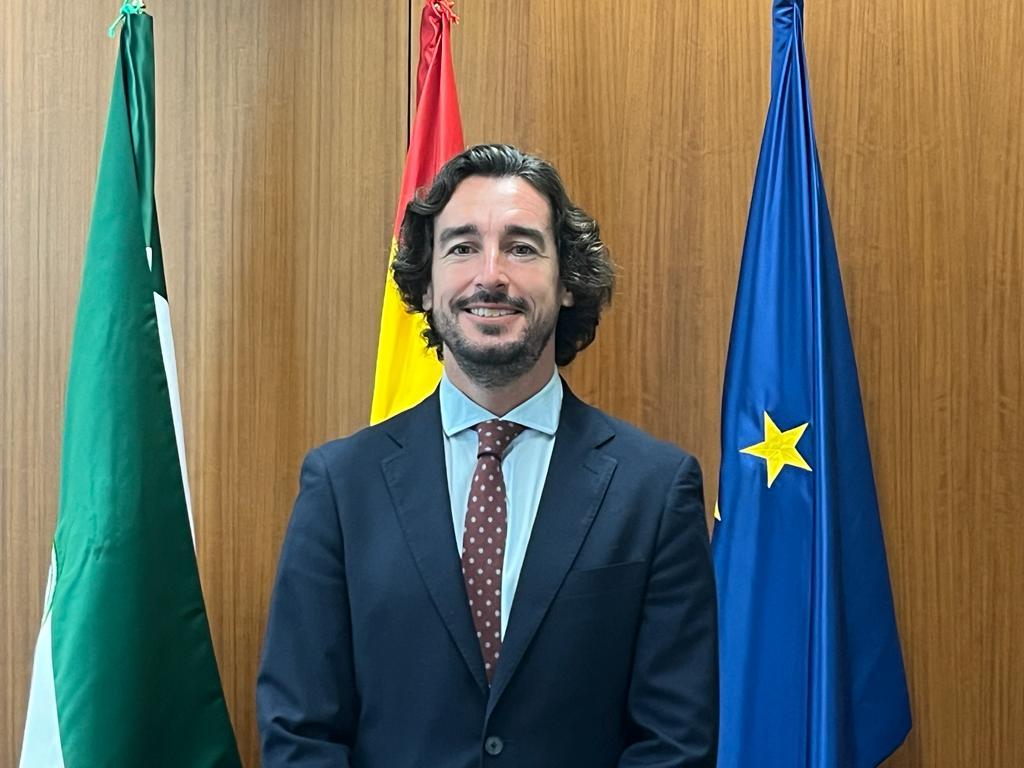
Born in Huelva in 1989, Javier González is a Law graduate from the University of Huelva. He served as a city councilor in the Huelva City Council until last June, also holding positions as a board member of the Huelva Municipal Urban Transport Company (Emtusa) and of the Social Council of the University of Huelva. He has also worked as a legal advisor in various private sector organizations and specializes in criminal compliance. He currently holds the position of Director General for the Promotion of Entrepreneurship and Continuing Education at the Andalusian Government.
How is the collaboration between administrations, companies, and universities being organized to strengthen Seville’s position as a space capital?
Seville’s strategy as a space capital relies on real and continuous collaboration between administrations, companies, and universities, which no longer work in isolation but as part of a single ecosystem. Through initiatives such as Seville, Spanish Space Capital, joint R&D projects, infrastructures like ESA BIC Andalusia, and training closely aligned with industry needs, talent, innovation, and the market are connected. These elements, along with the presence of the Spanish Space Agency and the city’s international projection, contribute to consolidating a solid model that positions Seville as an aerospace reference in southern Europe.
One of the major challenges in the sector is inspiring scientific and technological vocations. What role is Seville, Spanish Space Capital, playing in this regard, and how is it bringing space closer to new generations?
Seville, Spanish Space Capital plays a very important role in making the space sector tangible for young people, connecting science with real future opportunities. Through outreach activities, educational programs, direct contact with companies, and educational challenges, interest in STEM careers is fostered, showing that it is possible to build a professional path in this sector from the city. Along these lines, initiatives such as the Comprehensive Strategy for Educational Entrepreneurship and events like the NASA Hackathon enable young people and professionals interested in technological entrepreneurship to work on solutions related to space exploration, open data usage, and challenges both in space and on Earth through the design of entrepreneurial projects.
Beyond young talent, do you think the new space economy can open opportunities for the retraining of senior talent from other industrial or technological sectors?
Absolutely, because the space sector needs diverse profiles, and many skills are transferable. It is an opportunity for professionals with experience in other industrial or technological sectors to find new paths in a field with great potential.
Considering the aerospace ecosystem developing in Seville and Andalusia, what skills do you consider essential for those who want to pursue a professional career in this sector?
Thanks to its high export volume and the highly specialized human capital, Andalusia is the second Spanish region in terms of employment and revenue in the aerospace field. Those aiming to build a career in this sector must develop a strong multidisciplinary technical foundation combined with qualities such as adaptability, resilience, and creativity. This is a context undergoing international transformation, so those who work in a coordinated and forward-looking manner will achieve a successful career trajectory.
What role can continuing education play in this process, especially for professionals looking to redirect their careers toward this new industry?
Continuing education is key to adapting to a constantly evolving sector. Andalusia offers flexible programs closely connected with companies, facilitating knowledge updating and professional reorientation. Workshops, meetings, and sectoral forums such as Investor Day, or events aimed at connecting talent with investment and hands-on learning about creating and scaling tech companies, complement formal education and accredited studies, allowing professionals to update skills, access new opportunities, and engage with emerging sectors such as space through active learning.
The inauguration of ESA BIC Andalusia is an important milestone. What impact do you expect this incubator to have on Seville’s entrepreneurial ecosystem and the generation of new space-related startups?
ESA BIC Andalusia will be a turning point for Seville’s space ecosystem, offering startups access to financing, technology, specialized mentors, and international collaboration networks. Its purpose is not only to attract innovative projects but also to accelerate their transformation into viable businesses, promoting local tech entrepreneurship and consolidating an ecosystem where talent can develop high-impact ideas within the space sector. This strengthens the strategy of creating professional and business growth opportunities linked to innovation and knowledge.
From your perspective, what conditions must an ecosystem meet to truly be attractive for entrepreneurship in the space sector?
An attractive and competitive ecosystem needs qualified talent, infrastructure, access to financing, public-private collaboration, and a clear strategy that provides stability and confidence to entrepreneurs. It also requires ongoing support and agile administration to facilitate project development. In this regard, the network of Andalusian Entrepreneurship Centers (CADE), managed by Andalucía Emprende, plays a key role, offering specialized professionals who advise, mentor, and support entrepreneurs at all stages of business creation and consolidation, strengthening the ecosystem’s capacity to generate innovative and sustainable startups.
Looking ahead, what data would you like to see in a report on Seville’s space ecosystem, e.g., number of startups, investment attracted, or projects developed?
I would like to see sustained growth both in the number of startups and private investment. This would indicate that the ecosystem has matured and is able to generate trust and opportunities independently. Similarly, an increase in business consolidation is always a sign of a healthy economic system.
What impact do you think this space ecosystem will have on Seville’s economy, innovation, and international projection in the coming years?
The impact will be significant, as we are talking about a strategic, high value-added sector that drives innovation, attracts investment, and diversifies the economy. This will undoubtedly help position Seville as an internationally recognized technology hub, capable of attracting talent, projects, and global partnerships, strengthening its role in the knowledge economy.